
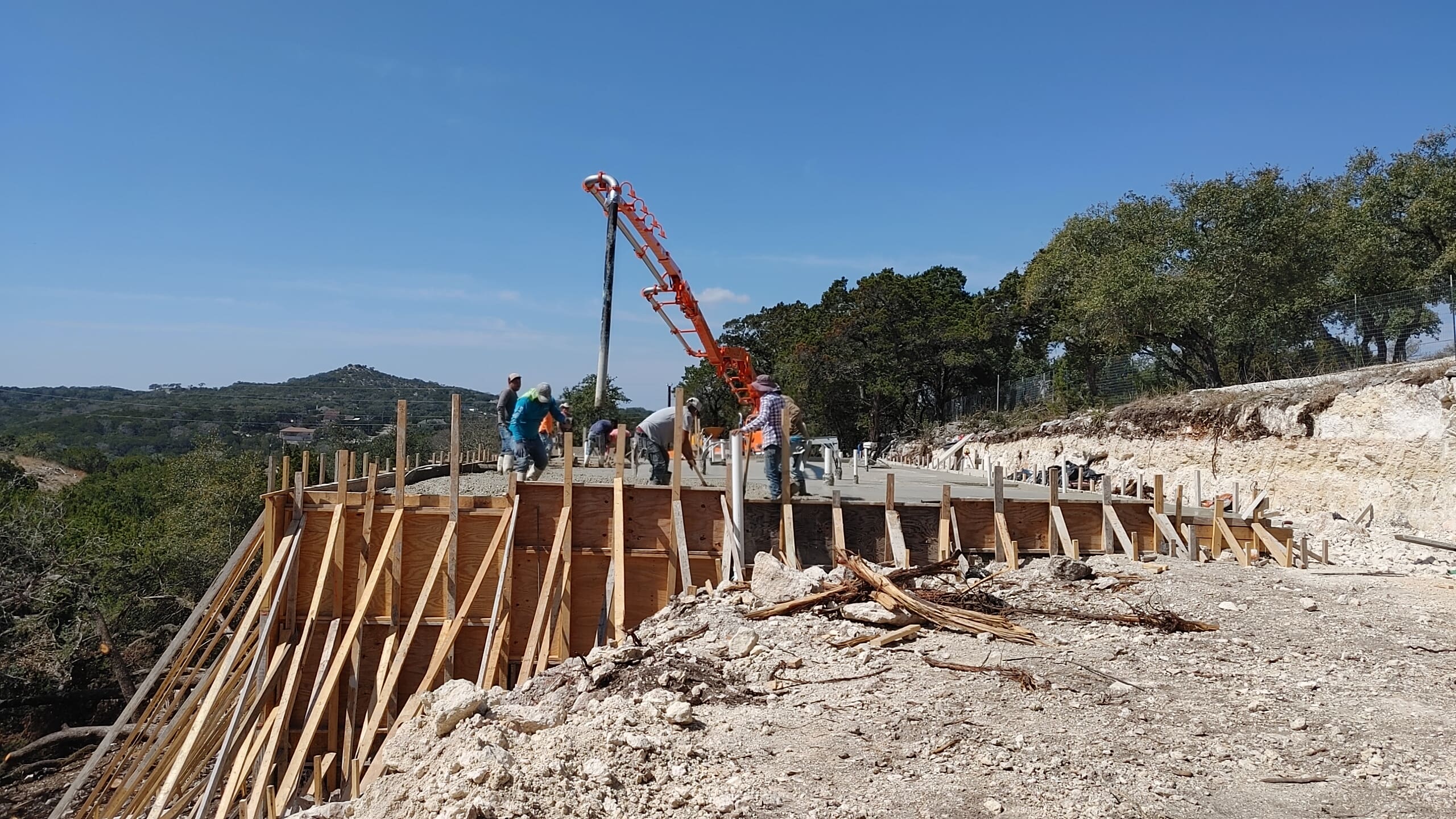
Sloped Lots Are Beautiful — But They’re Not Cheap to Build On
Many Hill Country buyers fall in love with a sloped lot because of the view, the trees, or the privacy. We get it — some of the most gorgeous homes in Canyon Lake sit on hillsides or terraced land.
But the truth is this:
The slope of your lot can add tens of thousands of dollars to your build — sometimes more — long before framing even begins.
At DMH Development, we’ve worked on everything from gentle rolls to dramatic drop-offs. This guide breaks down exactly what drives those costs so you know what to expect before you buy.
Why Sloped Lots Cost More to Build On
The challenge of a sloped lot is simple:
You have to create a level, structurally sound surface for your home — and that takes engineering, materials, and specialized work.
Here’s what adds up:
1. Engineering + Soil Studies ($2,000–$6,000+)
A sloped lot requires more detailed analysis than a flat lot.
You may need:
- Geotechnical soil testing
- Structural engineering for foundation design
- Drainage and grading plans
Steeper slopes = more engineering hours = higher cost.
2. Excavation, Cut & Fill Work ($10,000–$40,000+)
To create a level building pad, crews may need to cut into a hillside, haul out rock, or bring in fill material.
In the Hill Country, solid limestone is common, which means:
- Heavy equipment
- Jackhammers or hydraulic breakers
- More time on site
Even a moderate slope can require extensive cut work.
3. Foundation Upgrades ($20,000–$150,000+)
This is the big one. Foundation costs on a sloped lot can be double or triple those of a flat lot.
Common foundation solutions for slopes include:
- Tall stem walls
- Pier-and-beam systems
- Deep piers drilled into limestone
- Retaining-grade beams
The steeper your lot, the more material and engineering your foundation requires — and that’s where budgets can get blown quickly.
4. Retaining Walls ($8,000–$60,000+)
Retaining walls are often required to hold soil in place or create usable yard space.
Costs vary based on:
- Height (every extra foot increases structural requirements)
- Length
- Material (limestone block, concrete, engineered systems)
If your lot requires multiple retaining walls, the cost can climb fast.
5. Driveways & Access Challenges ($5,000–$40,000+)
Steep driveways require special grading, drainage, and sometimes retaining walls.
Plus, sloped sites reduce the places trucks and trailers can safely access, which can:
- Increase build time
- Require additional staging areas
- Add labor costs
6. Drainage & Water Control ($3,000–$15,000+)
Water moves fast on Hill Country slopes.
Your property may require:
- Swales
- French drains
- Additional gutters
- Berms
- Channeling water away from foundations
Skipping drainage is the quickest way to ruin a good home — so this one is non-negotiable.
What a “Typical” Sloped-Lot Cost Increase Looks Like
Here’s what we see most often for a sloped lot in Canyon Lake or surrounding Hill Country communities:
Mild Slope (5–10%)
Additional cost: $10,000–$30,000
Usually minimal foundation adjustments and light grading.
Moderate Slope (10–20%)
Additional cost: $30,000–$80,000
Often includes retaining walls, deeper piers, more excavation.
Steep Slope (20%+)
Additional cost: $80,000–$200,000+
You’re paying for engineering, excavation, multiple retaining walls, and a complex foundation.
DMH Note:
We’ve seen steep-lot foundations exceed $250,000 when the home footprint was large or the terrain required multiple levels.
How to Choose a Sloped Lot the Smart Way
If you want a sloped lot for the views, you absolutely can — you just need to choose wisely.
Here’s what we recommend:
✔️ Look for a lot that slopes back to front
This usually allows the driveway to come in from the higher point.
✔️ Avoid lots that fall sharply left-to-right
These create expensive foundation engineering and complex retaining needs.
✔️ Favor slope that works with your home design
Walk-out basements and tiered patios can turn a slope into an asset.
✔️ Ask your builder to walk the lot before you buy
We can tell you quickly whether your slope will add $10K… or $150K.
When a Sloped Lot is Worth It
Not every slope is a budget killer. Sloped lots can offer:
- Elevated Hill Country views
- Natural water drainage
- More architectural interest
- Secluded balconies or patios
- A perfect layout for a walk-out lower level
If the lot checks the boxes and the budget is right, a slope can be your best asset — as long as you plan ahead.
The DMH Advantage: Honest Guidance Before You Buy
Some builders are hesitant to talk about the cost of sloped lots until you’ve already committed.
DMH does the opposite.
Our priority is protecting your investment. That’s why we offer a $500 Lot Analysis Service, which includes:
- On-site slope measurement
- Foundation cost projection
- Retaining wall and driveway considerations
- Buildability and layout recommendations
- A realistic budget range based on your home goals
This gives you clarity BEFORE you sign anything.
❓ Frequently Asked Questions About Building on a Sloped Lot
Here are the most common questions we get from homeowners in Canyon Lake and across the Hill Country.
1. How much more expensive is it to build on a sloped lot?
Most Hill Country projects run $10,000–$200,000+ higher depending on slope severity, foundation needs, retaining walls, and excavation.
A moderate slope (10–20%) typically adds $30,000–$80,000.
2. Is it always more expensive to build on a sloped lot?
Yes — even mild slopes require additional engineering, grading, or foundation adjustments.
Some slopes only add a little. Others add a lot.
3. Can a sloped lot increase my home’s value?
Absolutely. If the slope offers:
- elevated Hill Country views
- space for outdoor living levels
- a walk-out basement
— your resale value can rise significantly.
But only if the foundation and drainage are done right.
4. What type of foundation works best for a sloped lot?
Common solutions include:
- Pier-and-beam systems
- Tall stem walls
- Grade beams
- Deep piers drilled through limestone
Your foundation must match both the slope and the soil.
5. Can any builder handle a sloped lot?
No. Sloped lots require:
- experienced engineering partners
- knowledge of Hill Country soils
- experience working with limestone excavation
- familiarity with local drainage patterns
DMH has built on dozens of challenging lots in the Canyon Lake area — we know what to watch for before it becomes a cost issue.
6. How do I know if a lot is too sloped to build on?
Most slopes are buildable with the right design.
But a lot becomes cost-prohibitive when:
- retaining walls exceed 10–12 feet
- there’s heavy drop-off left-to-right
- the driveway slope is unsafe or unfixable
- the home footprint becomes too expensive to engineer
A professional lot evaluation will tell you this before you purchase.
7. Will my driveway be affected by the slope?
Yes — steeper slopes require more grading and may need retaining walls or additional drainage.
Some lots naturally allow a good driveway angle; others need design creativity.
8. Should I get a builder to walk the lot before I buy?
Always.
A 30-minute walk-through can save you $20K–$150K in unexpected foundation or excavation costs.
9. Can I design my home to work with the slope?
Definitely.
The best sloped-lot homes use the terrain to their advantage with:
- lower-level walk-outs
- tiered patios
- elevated decks
- dramatic views
A smart design can turn a slope into your greatest feature.
10. Does a sloped lot cause drainage problems?
Not automatically — but poor planning will.
Good builders design:
- swales
- French drains
- downspout extensions
- proper grading
— to ensure water moves away from your home.
📞 Ready to Evaluate a Sloped Lot?
Let’s make sure the land you fall in love with is land you can confidently build on — without surprises
📞 Text, email, or simply fill out our contact form to schedule your Lot Analysis
Be The First To Comment