
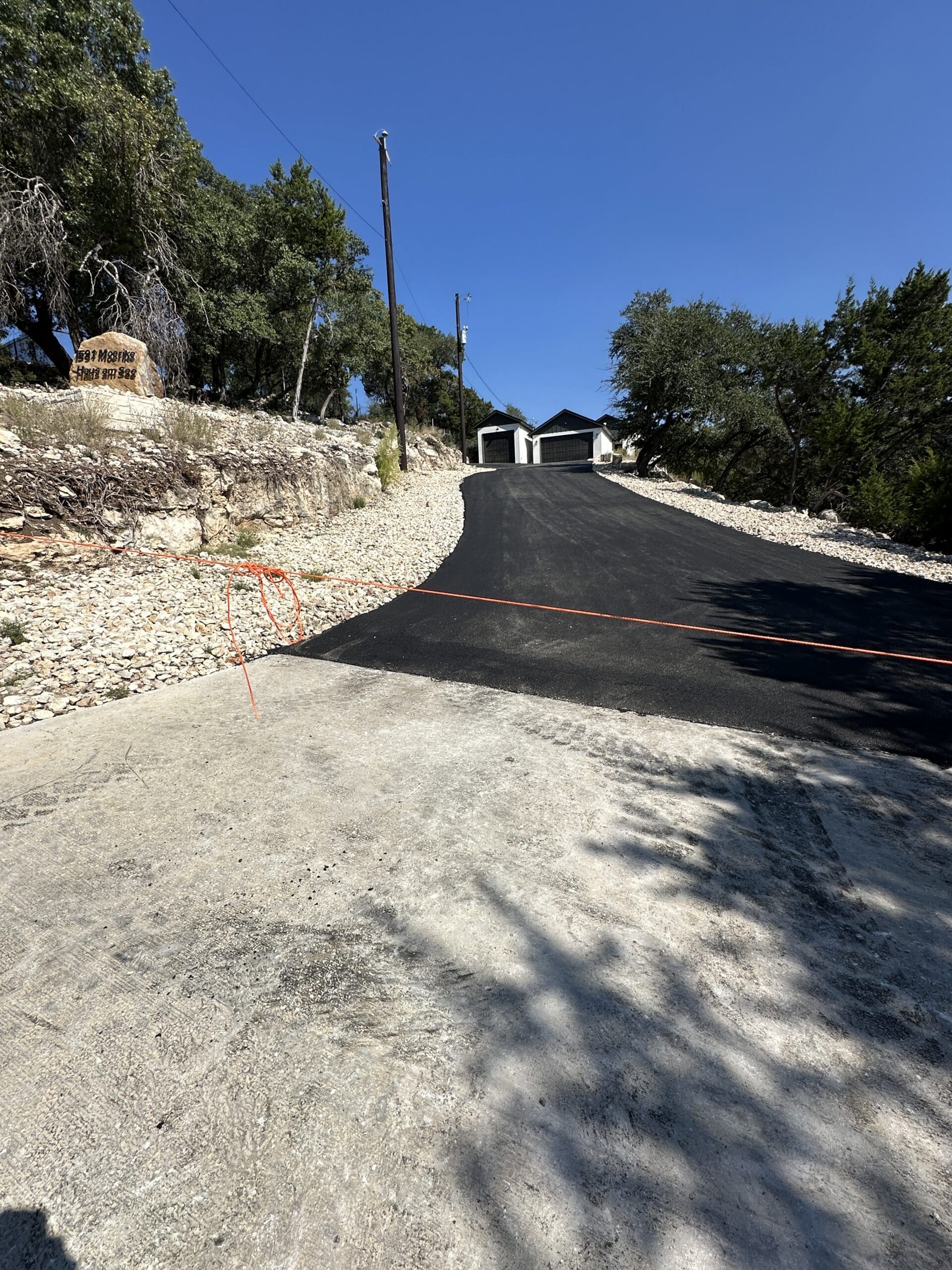
Why Driveway Planning Matters More Than You Think
When buyers evaluate a lot in the Texas Hill Country, they focus on the home site — not the driveway. But the driveway often becomes one of the most underestimated site costs in a build.
We’ve seen beautifully designed homes end up too close to the road simply because driveway costs weren’t factored early enough. With proper planning, your driveway can enhance privacy, curb appeal, and long-term value — without blowing your budget.
At DMH Development, driveway layout is one of the first things we evaluate during a lot walk.
What Drives Driveway Costs in the Hill Country?
Driveway pricing varies widely based on site conditions. Here are the biggest cost drivers:
1. Length of the Driveway
This is the most obvious factor.
- Short driveway (30–50 ft): lower cost
- Long driveway (100–300+ ft): significantly higher cost
A 16′ wide × 100′ long driveway typically costs:
- $9,000–$15,000 (asphalt)
- $18,000–$30,000 (concrete)
Longer driveways multiply costs quickly.
2. Slope and Grade
Steep driveways require:
- more excavation
- added base material
- proper drainage design
- possible retaining walls
Driveway slopes must meet safety standards and often need flatter transitions near the road and garage.
3. Driveway Width
Wider driveways cost more but improve usability.
- Standard residential width: 12–16 feet
- Two-car access or shared driveways: 18–20 feet
Some HOAs specify minimum widths.
4. Material Selection
Each option has pros and cons:
Gravel:
- Lowest upfront cost
- Requires maintenance
- Can wash out on slopes
Asphalt:
- Mid-range cost
- Faster installation
- Softer in extreme heat
Concrete:
- Highest upfront cost
- Longest lifespan
- Best for steep or curved driveways
Most DMH clients choose concrete for durability and appearance.
5. Base Prep & Subgrade Conditions
Hill Country soils and limestone require:
- heavy compaction
- thicker base layers
- rock cutting or hammering
Skipping base prep leads to cracking and failure.
6. Drainage Requirements
Water moving across or under a driveway must be controlled.
This may include:
- culverts
- swales
- trench drains
- concrete flumes
Drainage is critical on sloped or creek-adjacent lots.
Placing the Home: Close to the Road vs. Deeper on the Lot
Many Hill Country homes sit close to the road simply to reduce driveway costs. While that saves money upfront, it can reduce:
- privacy
- curb appeal
- resale value
When possible, placing the home farther back:
- improves views
- reduces road noise
- increases perceived lot size
DMH Advice: Balance driveway cost with long-term enjoyment. A longer driveway is often worth the investment.
Driveway Tie-Ins, Permits & Right-of-Way Rules
Most driveways connecting to county or city roads require permits.
These permits specify:
- driveway width
- culvert size
- construction materials
- inspection requirements
For FM roads or highways, the government may dictate driveway location and access angles.
Failing to follow right-of-way standards can delay construction or require costly rework.
Common Driveway Mistakes We See
❌ Designing the driveway after house plans are finalized
❌ Underestimating slope impact
❌ Ignoring drainage flow paths
❌ Choosing materials that don’t suit the terrain
❌ Not accounting for construction vehicle access
A well-designed driveway supports the entire build process.
DMH Tip: Design the Driveway First
At DMH, we often start with driveway layout before finalizing the home footprint. Why?
Because driveway access impacts:
- foundation design
- grading
- drainage
- garage placement
- overall site efficiency
This approach prevents surprises later.
❓ FAQs About Driveway Costs in the Hill Country
1. How much should I budget for a driveway in the Hill Country?
Most homeowners spend $10,000–$30,000, but long or steep driveways can exceed $50,000.
2. Is concrete worth the extra cost?
Yes, especially on slopes. Concrete holds up better over time and requires less maintenance.
3. Can I use gravel to save money?
You can, but gravel often requires frequent regrading and may not work well on steep slopes or in heavy rain.
4. Do I need a driveway permit?
Almost always, yes — especially for county, city, or FM roads.
5. Can driveway placement affect my home design?
Absolutely. It impacts garage orientation, home width, grading, and access.
6. Should the driveway be planned before or after home design?
Before. Early planning avoids costly redesigns.
📞 Need Help Evaluating Driveway Costs on Your Lot?
DMH Development offers a $500 Lot Analysis Service that includes driveway feasibility, slope evaluation, drainage planning, and cost forecasting.
👉 Text or email us today to schedule your lot walk and avoid unexpected site costs.
Be The First To Comment