
Building Your Dream Home – Ceiling and Door Heights
Designing a dream home in the heart of Hill Country Texas is one of life’s most exciting journeys. But there’s a crucial detail that often gets overlooked—ceiling and door heights. These dimensions dramatically impact the spaciousness, comfort, and resale value of your home.
Unfortunately, we still see brand-new custom homes—sometimes even dream homes—built with short 6’8” entry doors and standard 8’ ceilings. Let’s break down why that’s a mistake and how to ensure your new home reflects modern living standards.
Why 8-Foot Ceilings Should Be Left in the Past
Sure, 8’ ceilings were once the norm. But times—and styles—have changed. Short ceilings can make even a well-designed space feel cramped and outdated. While these may make sense in homes under 1,200 sq. ft. where space efficiency and budget are top priorities, using them in larger homes can cheapen the experience.
Also, small builders often rely on legacy floor plans designed around 8’ ceilings because they know the costs and have built them repeatedly. But if you have the choice, especially when working with an architect or engineer, choose higher ceilings. They feel better. They look better. And yes, they’re absolutely worth it.
Understanding the Ceiling Plate: Where It All Begins
In construction terms, the ceiling plate is the horizontal framing that tops your exterior walls and serves as the base for your roof system. Framers build up to this line before placing roof trusses or rafters on top. This plate height sets the baseline for how high your ceilings will be throughout the home.
Whether you’re opting for engineered trusses or stick-framed rafters, the plate height is essential. One word of advice—always have your trusses engineered and stamped by a pro, typically through your lumber supplier. Leaving these critical calculations to the framing crew is risky. They may be highly skilled, but structural load math is a job for engineers.
From Plate to Peak: Designing with Height in Mind
In a recent project we designed, engineered, and built near Canyon Lake, we used 9’ exterior wall plates across the entire home. That gave us flexibility to achieve even higher interior ceilings by adjusting the roof slopes.
Here’s a practical example: to fit an 8’ high garage door, the garage wall height was bumped up to 10’, and the interior ceiling sloped to match. The result? A garage that felt like part of the home—not a boxy add-on.
Interior rooms that border exterior walls—like bedrooms—also used this slope-to-plate technique. Each bedroom starts at a 9’ plate height and slopes upward to 10’ or even 11’, especially in the primary suite. The result is a soaring, serene environment.
Living Spaces that Breathe: High Ceilings Done Right
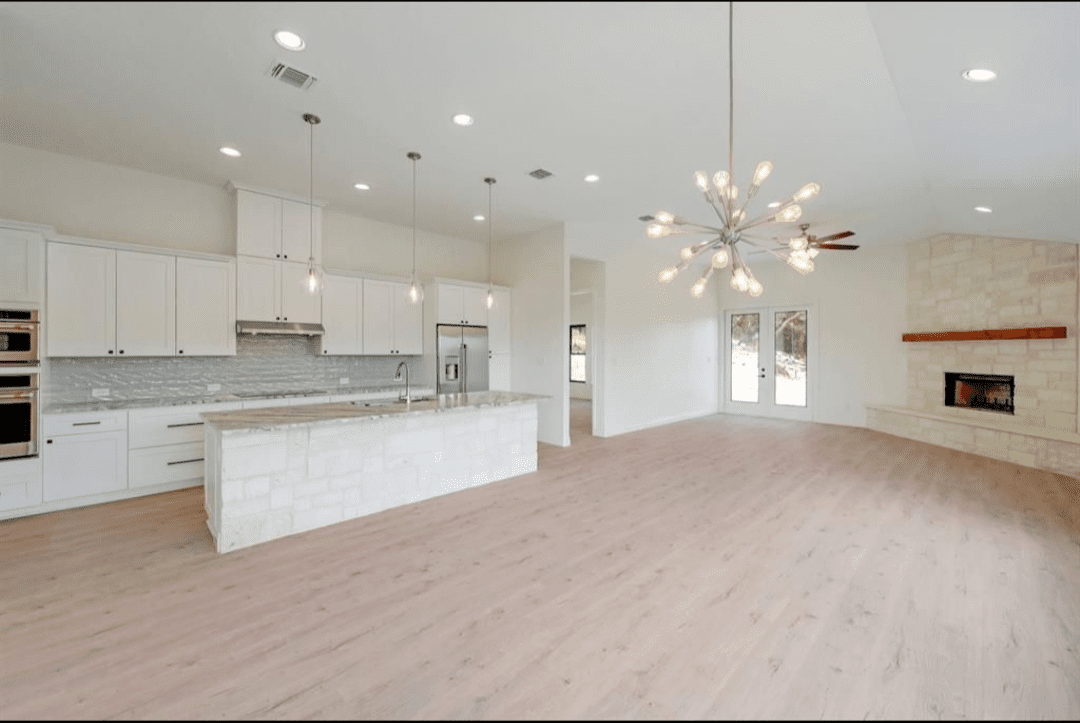
In this same Canyon Lake home, the great room, master bedroom, kitchen, and dining area all boast 11’ ceilings. Most of these rooms start at a 9’ exterior wall plate and slope up, giving the home a light, airy, and open atmosphere.
This design isn’t just a luxury; it’s a livability game-changer. The extra space above your head makes rooms feel larger and more comfortable. You’ll notice it—and your guests will, too.
Let’s Talk Doors: Height, Width, and Smart Choices
We won’t say too much, but here’s the bottom line: use 8’ tall doors throughout. Trust us, the look and feel is far superior. For your main entry door, go with a minimum 3’ width, and if you’ve got a dedicated foyer, bump that up to a 42” wide door for an even more luxurious entry.
In utility spaces like the laundry room and garage, use 2’8” wide doors. Anything smaller, and you’ll be removing the door just to bring in a washer or dryer. That’s the kind of design frustration that’s easily avoidable.
Inside, all our doors in the Canyon Lake project ranged from 2’4” to 2’8” wide, but every single one of them stood 8’ tall. When paired with higher ceilings, it’s an aesthetic that’s clean, modern, and downright inviting.
Cost Considerations for Higher Ceilings and Doors
You might be wondering: does all this height come with a hefty price tag? Honestly, the extra cost is surprisingly manageable. Here’s a rough estimate for a 2,500 sq. ft. home:
- $2,500 for added lumber, drywall, and paint
- $60 to $120 extra per door for 8’ height (over standard 6’8”)
If you’ve got 14 interior doors, that’s roughly $1,000 to $1,600 more total. Small price to pay for a truly elevated design.
And if you’re working with a savvy small builder, you may find these costs offset elsewhere—like in efficient framing, supplier discounts, or smart layout choices.
Big Style, Bigger Value: Why Ceiling and Door Heights Matter
Here’s the thing: when people walk through a house with tall ceilings and matching door heights, they feel it immediately. The space breathes. It welcomes. It impresses.
If you’re investing the time and money to build your dream home, don’t cut corners where it really counts. Designing with proper ceiling and door heights is a simple way to elevate your entire living experience.
Final Tips for Homeowners and Builders
- Minimum recommendation: 10’ ceilings and 8’ doors in living spaces
- Plan early: Address plate heights, door dimensions, and truss design in the architectural phase
- Engineer trusses professionally: Avoid future sagging, sticking doors, or structural issues
- Think future-proof: Designs with higher ceilings and wide doors accommodate aging-in-place needs and modern furniture dimensions
Have Questions About Building Your Dream Home?
Feel free to reach out. We love talking about this stuff and would be happy to guide you.
📧 Email: dmhdevcorp@gmail.com
📝 Subject Line: “Blog Question”
🌐 Free Consultation: Schedule here at dmhdevcorp.com
Happy Dream Home Building! 🏡
FAQs
What is the best ceiling height for modern homes?
10–11 feet for living spaces is ideal. It gives the home an open, airy, and luxurious feel.
Do higher ceilings increase HVAC costs?
They can slightly increase heating and cooling loads, but with good insulation and smart zoning, it’s manageable.
How wide should interior doors be for accessibility?
2’8” is ideal for laundry rooms and garage entries. For universal design, consider 3’ widths where possible.
Is it worth paying more for 8’ doors?
Absolutely. They visually match high ceilings and dramatically improve interior aesthetics.
How can I tell if my trusses are properly engineered?
Work with a lumber supplier and have your structural engineer stamp the design. Avoid guesswork with framing crews.
Are sloped ceilings better than flat ceilings?
Sloped ceilings add visual interest and perceived space. Flat ceilings are easier to build but can feel boxed in.
Your dream home deserves dream-level design. Don’t let low ceilings or short doors limit your vision.
Be The First To Comment